
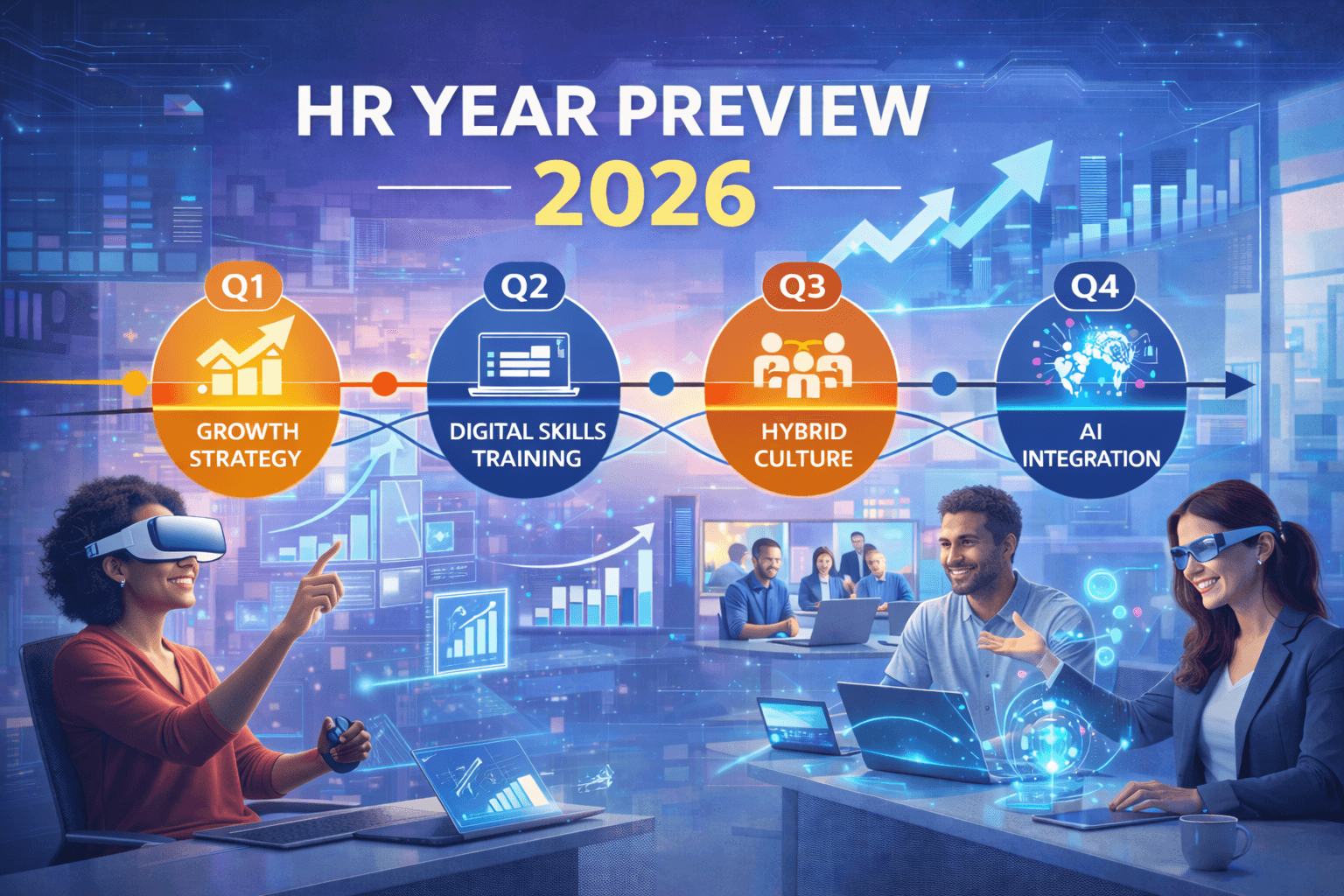
The Status Quo: Time for a Reset
Do you remember the years before the pandemic? Growth was the order of the day. Companies hired whatever they could get – often faster than HR processes could keep up. There was no time for efficiency, clean structures, and well-thought-out systems. The skills shortage dictated the pace.
Today the world looks different. The German job market shows a changed picture in 2025/2026: According to the Randstad-ifo survey, only 28 percent of companies complain about a lack of applicants – two years ago it was more than half. With around 2.9 million unemployed (highest level since 2010), the tide is turning back toward an employer market.
Of course, the skills shortage in key areas remains:
Energy sector with 92% skills shortage
Healthcare and IT with 89% each
Technology, skilled trades, and logistics continue to be severely affected
But this is precisely where the opportunity lies: Now is the moment to set up HR efficiently. The years of hectic growth have left process sprawl in many companies – manual workarounds, Excel lists, isolated solutions. Those who clean up these legacy issues now will be prepared for the next upswing.
This means specifically: Using the current phase to consolidate HR processes, implement the right HRIS, consolidate IT solutions and thereby reduce license costs – and create structures that scale before the next growth spurt comes.
The 5 Most Important HR Priorities for 2026
1. HR Digitalization: The Right HRIS as Foundation
Before AI, analytics, and automation can take hold, a solid foundation is needed: a modern Human Resource Information System (HRIS). But the selection is complex – Personio, Factorial, HiBob, and numerous other providers are vying for attention.
The decisive questions:
Which system fits our company size and culture?
How complex is the data migration from existing systems?
Can the solution be integrated with our other tools?
Reality shows: Many companies underestimate the implementation effort. Careful evaluation and professional guidance during implementation determine success or frustration.
2. Process Automation and System Integration
Almost half of all CHROs prioritize technology investments for the coming years. But only 5 percent of HR teams feel fully prepared for effective implementation.
The key lies not in individual solutions, but in intelligent networking:
Workflow automation for recurring HR processes
API integrations between HR software, time tracking, and payroll
Central dashboards for data-driven decisions
The trend is clearly toward Lean HR – more impact with less effort. Automated processes free up resources so HR teams can focus on strategic work.
3. From Administrator to Strategic Business Partner
In 2026, HR is definitively evolving from administrative manager to strategic driver of corporate transformation. This means:
Networking with other areas: IT, finance, communication, and sustainability work more closely together
People Analytics as standard: Data that doesn't just describe but anticipates future developments
Proactive design: HR recognizes trends before they become problems
This development requires two things: new competencies in the HR team – and digital tools that bring together and make usable data from various sources.
4. Skills Instead of Job Profiles: New Thinking in Recruiting
Traditional job descriptions and career paths are no longer sufficient. The trend is clearly toward Skill Based Hiring:
Focus on competencies instead of formal degrees
Emotional intelligence, empathy, and critical thinking are prioritized
Career changers receive more opportunities
For companies, this means: Recruiting processes must become more flexible – and the HRIS must be able to support this new mindset.
5. Employee Retention Through Employee Experience
The competition for talent makes employee retention more important than ever. Instead of focusing exclusively on external recruiting, the focus shifts to:
Internal career paths: Enabling upskilling and lifelong learning
Flexible work models: 59% work full-time in the office – but only 19% are satisfied with it
Psychological safety: A culture with feedback, appreciation, and development opportunities
Particularly important: Mental Health. Mental illnesses now cause about 17.4 percent of all sick days. A good HRIS also supports this – through transparent communication, self-service functions, and fewer administrative hurdles for employees.
The Opportunity for Mid-Market Companies
While large corporations often struggle with complex legacy systems and lengthy decision processes, mid-market companies have a real advantage: They can act more agilely and implement modern, cloud-based HR solutions more quickly.
The challenge? Many HR teams in mid-market companies face a dilemma: They know that digitalization is necessary – but they lack the time to survey the market, evaluate systems, and manage an implementation. At the same time, there's often a lack of internal IT know-how for complex integrations and data migrations.
The solution: A partner who brings both – deep understanding of HR processes and technical expertise for implementation. Only this way do solutions emerge that not only function technically but also stand up to HR daily operations.
Conclusion: Setting the Course Now
2026 will be a decisive year for HR. The companies that invest in the right priorities today – a suitable HRIS, well-thought-out automation, data-driven decisions, and genuine employee retention – will have the edge in the competition for talent.
The good news: You don't have to go this path alone.
About DignativeX: As architects of HR transformation, we combine genuine HR experience with technical depth. From HRIS selection through implementation to system integration, we accompany companies on the path to digital HR. Schedule a non-binding consultation and learn how we can make your HR processes future-ready too.
Schedule appointment with Sascha
Sources: Randstad-ifo-HR survey Q4/2025, Federal Employment Agency, Gartner HR Study 2026, DIHK Skills Report 2025/2026, ManpowerGroup Talent Shortage Survey, DAK Health Report