
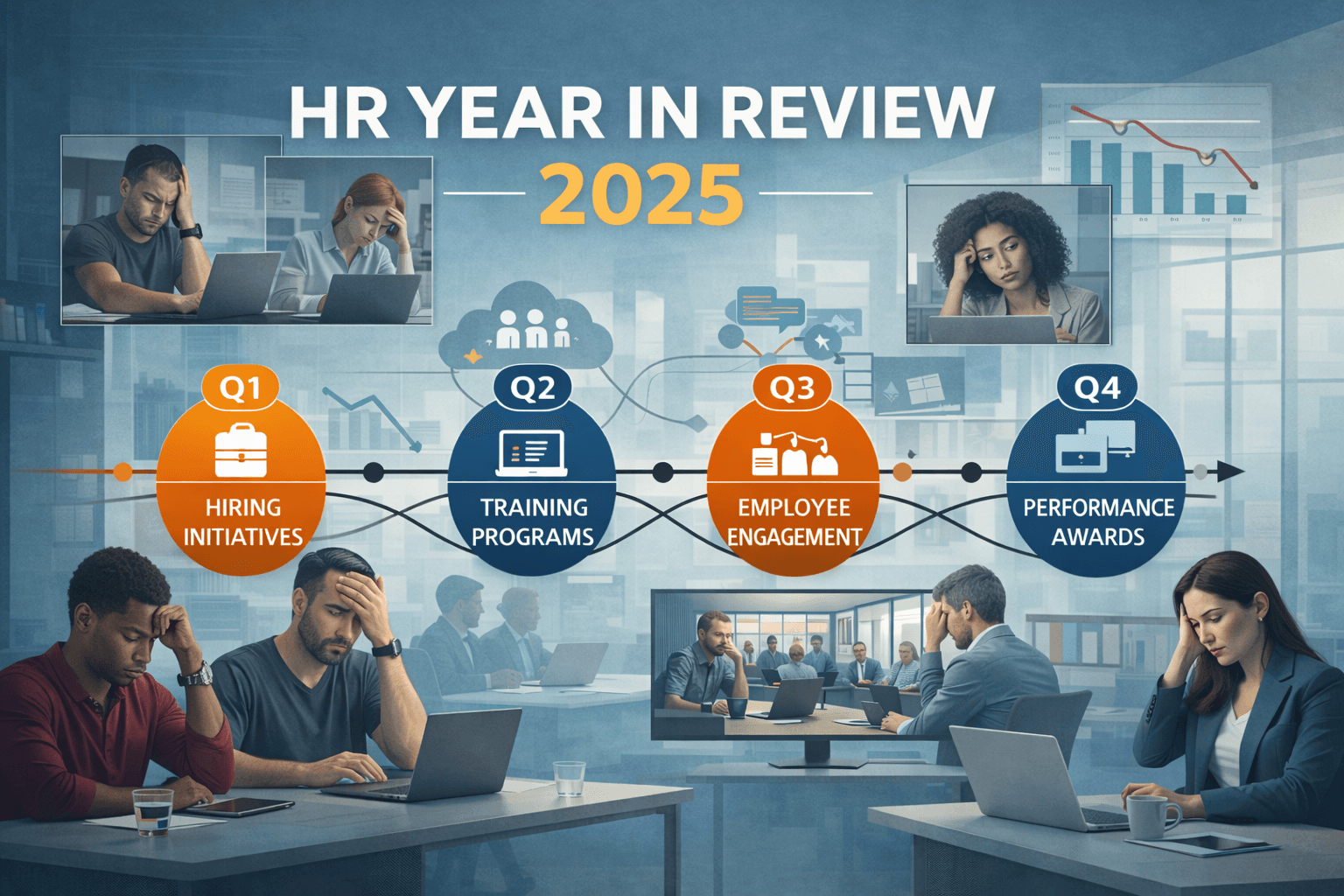
Remember when everyone was predicting AI would replace half of HR by 2025? Well, plot twist: we're here, and HR professionals are busier than ever. Let's cut through the noise and look at what actually happened versus what the crystal ball promised us.
The Great AI Takeover That… Didn't
Back in 2023, every HR conference was buzzing about AI automation. The forecasts were dramatic: chatbots handling all employee queries, algorithms making hiring decisions, and performance reviews run entirely by machine learning. Fast forward to today, and the reality is far more nuanced.
What the forecasts said: AI would automate 60% of HR tasks by 2025, fundamentally reshaping the profession.
What actually happened: AI became a powerful assistant, not a replacement. Sure, we're using AI for resume screening and scheduling interviews, but the human element remains irreplaceable. Why? Because employees still want to talk to actual humans about their careers, conflicts, and concerns. Shocking, right?
The real win has been in data analysis. HR teams are now spending less time wrestling with spreadsheets and more time interpreting insights. One client recently told us their HR team went from spending 15 hours a week on reporting to just 3 hours – but they're making better decisions than ever.
Remote Work Reality Check
The 2025 predictions painted a picture of either complete remote work domination or a total return-to-office renaissance. As usual, the truth landed somewhere in the middle, but with some unexpected twists.
The Hybrid Evolution
Hybrid work didn't just stick around – it evolved. Companies stopped treating it as a temporary pandemic solution and started building it into their DNA. But here's what caught everyone off guard: the skills gap this created.
HR departments suddenly needed to become experts in:
Digital employee experience design
Remote performance management
Virtual culture building
Technology adoption support
The companies that thrived were those that invested in upskilling their HR teams, not just their technology stack. One manufacturing client saw a 40% improvement in employee satisfaction after their HR team completed digital facilitation training.
The Unexpected Office Renaissance
Here's the curveball: office spaces didn't disappear, but they completely transformed. The prediction was either "offices are dead" or "everyone's coming back." Instead, offices became experience centers. Companies started designing spaces specifically for collaboration, creativity, and connection – not just desk work.
The result? HR professionals had to become part interior designer, part event planner, and part community manager. Not exactly what the 2025 forecasts included in the job description.
The Skills Revolution Nobody Saw Coming
While everyone was focused on technical skills and AI literacy, the real revolution happened in soft skills. The pandemic didn't just change where we work – it fundamentally shifted what skills matter most.
The forecast: Technical and digital skills would dominate hiring priorities.
The reality: Emotional intelligence, adaptability, and communication skills became the holy grail. Why? Because navigating constant change requires human skills that can't be automated.
Smart HR teams pivoted their development programs accordingly. Instead of just offering coding bootcamps, they invested in resilience training, conflict resolution, and cross-cultural communication. The companies that got this right saw 35% better retention rates compared to those that doubled down on technical training alone.
The Learning and Development Surprise
L&D budgets didn't just increase – they exploded. But not in the ways anyone expected. Microlearning, peer-to-peer mentoring, and just-in-time skill development became the norm. The traditional annual training calendar? Pretty much extinct.
The most successful approach we've seen combines AI-powered personalized learning paths with human coaching. It's not either-or; it's both-and.
What This Means for Your HR Strategy
So what's the takeaway from this forecast-versus-reality check? The future of HR isn't about choosing between human and digital – it's about orchestrating them together.
The HR professionals winning in 2025 are those who embraced being "hybrid professionals" themselves: part data analyst, part experience designer, part change management expert, and full-time human advocate.
If you're planning your HR strategy going forward, focus less on predicting the future and more on building adaptive capabilities. The companies thriving today aren't those that guessed right about 2025 – they're the ones that built the flexibility to evolve with whatever actually happened.
What's your experience been? Did any of the 2025 predictions pan out in your organization, or were you surprised by different changes entirely? Drop a comment and share your reality check with the community.